Hide outline
Share Blog
Blog
Author:
Was this lesson helpful?
Dive Deeper
Generate a follow-up sub-lesson on any aspect of this topic
Build a 13-week cash flow forecast with AI assistance. Set up inputs, model cash-in and cash-out, run scenarios, validate against bank activity, and turn the weekly output into decisions before liquidity gets tight.
Plenty of companies hit a cash crunch while their income statement still shows a profit. A 13-week cash flow forecast closes that gap by showing the bank balance you will actually have, week by week, for one quarter. Here is how to build one, with AI doing the heavy lifting and you keeping the judgment.
A 13-week cash flow forecast is a rolling, weekly projection of cash receipts and disbursements over one quarter. It works because the horizon is short enough to be built from known invoices, payroll dates, and debt schedules, yet long enough to give you time to act.
Think of it as an operating tool with three jobs. It gives liquidity visibility, it sets a weekly cadence where the forecast rolls forward and gets compared to actuals, and it defines decision triggers, such as pausing discretionary spend when projected cash falls below a set floor.
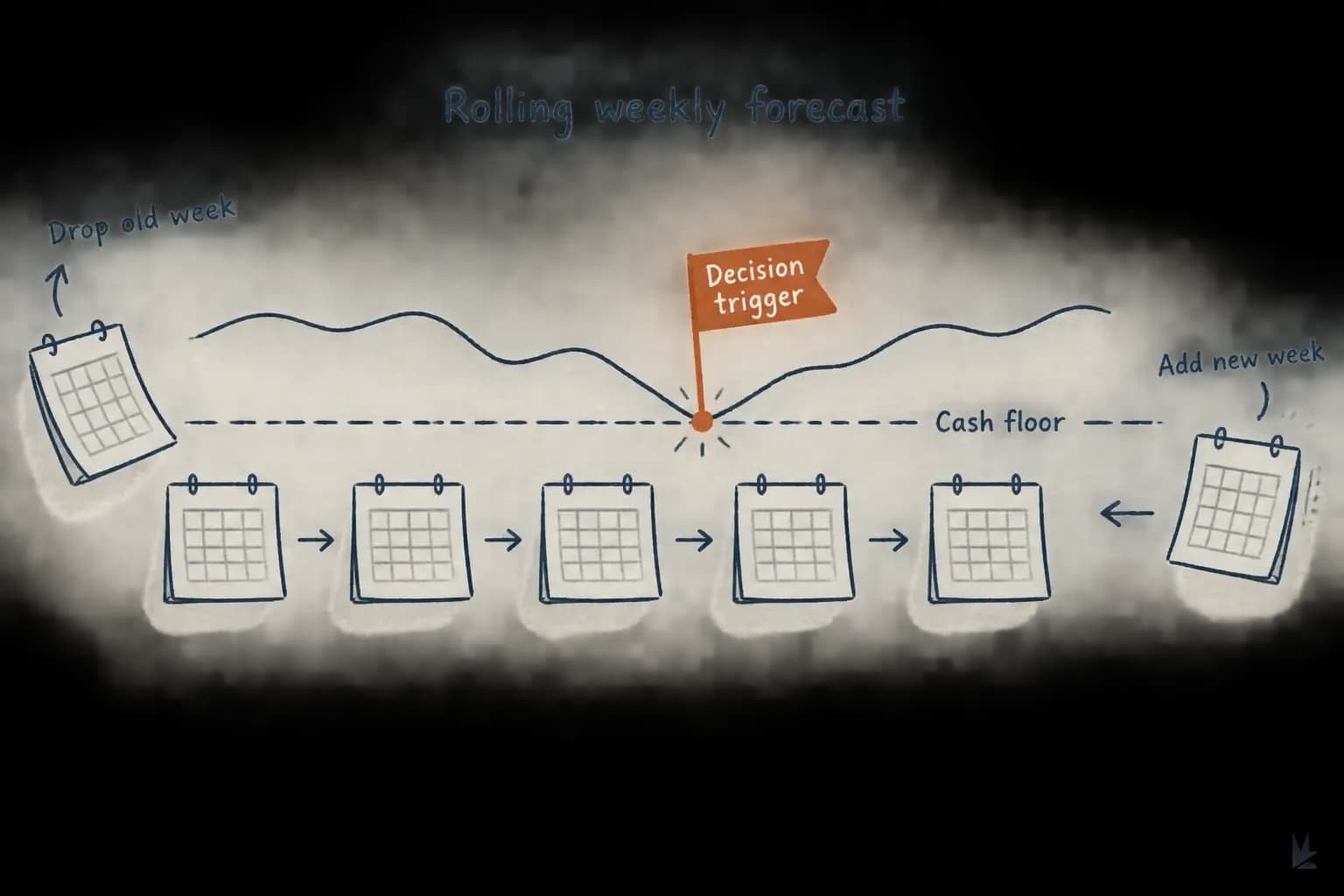
A rolling weekly view, with a cash floor that triggers action.
Gather the opening position first, then everything that will move it.
Lay these out in a tab per input and one weekly summary tab. Keep inputs separate from formulas so AI-generated changes never overwrite source data.
Start with collections, not revenue. Take each open invoice and assign an expected pay date using the customer’s actual payment history rather than the stated terms. A customer on net 30 who pays in 47 days belongs in week seven.
For invoices not yet issued, apply a collection curve to forecast billings, for example 20% in the first 30 days, 55% in days 31 to 60, and the rest after. Layer in seasonality from last year’s weekly pattern, and treat deferred revenue carefully because cash can arrive well before the revenue is recognized. Keep non-operating inflows such as grants, asset sales, or financing draws on their own line so they never mask operating weakness.
Terms LieModel invoices on observed payment behavior. Stated terms overstate near-term cash for almost every slow payer.
Cash-out is more predictable, which makes timing errors the main risk. Schedule vendor payments from AP aging according to your actual pay run, not the due date. If you pay on Thursdays, every bill lands on a Thursday.
Payroll follows its cadence, and months with three biweekly pay dates need to be flagged early. Add capex commitments, debt service, and tax deposits on their contractual dates. Then set a minimum cash policy, a floor such as two weeks of operating outflows or a covenant threshold, and add a row that shows headroom above it each week. That row is what drives decisions later.
AI is most useful for structure, mapping, and first drafts. Give it clear context and constrained tasks.
Ask for one job at a time with the schema stated. For example, paste an AR aging export and ask it to assign each invoice a pay week using a named rule, then return a table with invoice ID, amount, and week number. Request formulas such as SUMIFS and XLOOKUP rather than hardcoded values, and ask it to explain assumptions in a notes column.
Never let AI edit the input tabs or the opening balance. Have it check totals, so forecast receipts by week must equal the sum of the invoice-level schedule. Keep a change log, and review any formula it rewrites before it enters the live file.
Build best, base, and worst cases from a small set of drivers rather than separate models. A scenario selector cell that switches collection delay, revenue level, and vendor timing keeps everything consistent.
Test the shocks that hurt most. A 15% revenue drop, a key customer paying 30 days late, and a supplier moving you to prepayment each show a different weak week. Then run covenant stress tests by comparing projected cash or liquidity against the covenant threshold in every scenario. AI can draft the scenario table and summarize which driver moves the minimum cash week most, but you choose the assumptions.
A forecast you cannot trust is worse than none. Each week, tie the actual bank activity to the forecast and record variance by line, not just in total, so you can see whether collections or disbursements drifted.
Reconcile accrual to cash by checking that revenue, expenses, and balance sheet movements in AR, AP, and deferred revenue explain the forecast change. Watch for common error traps.
Run the same weekly rhythm every time. Update the opening balance on Monday, drop week one off and add week fourteen, review variances, adjust assumptions, and publish. Report to leadership and lenders with a one-page view showing ending cash, headroom over the floor, top variances, and the scenario range.
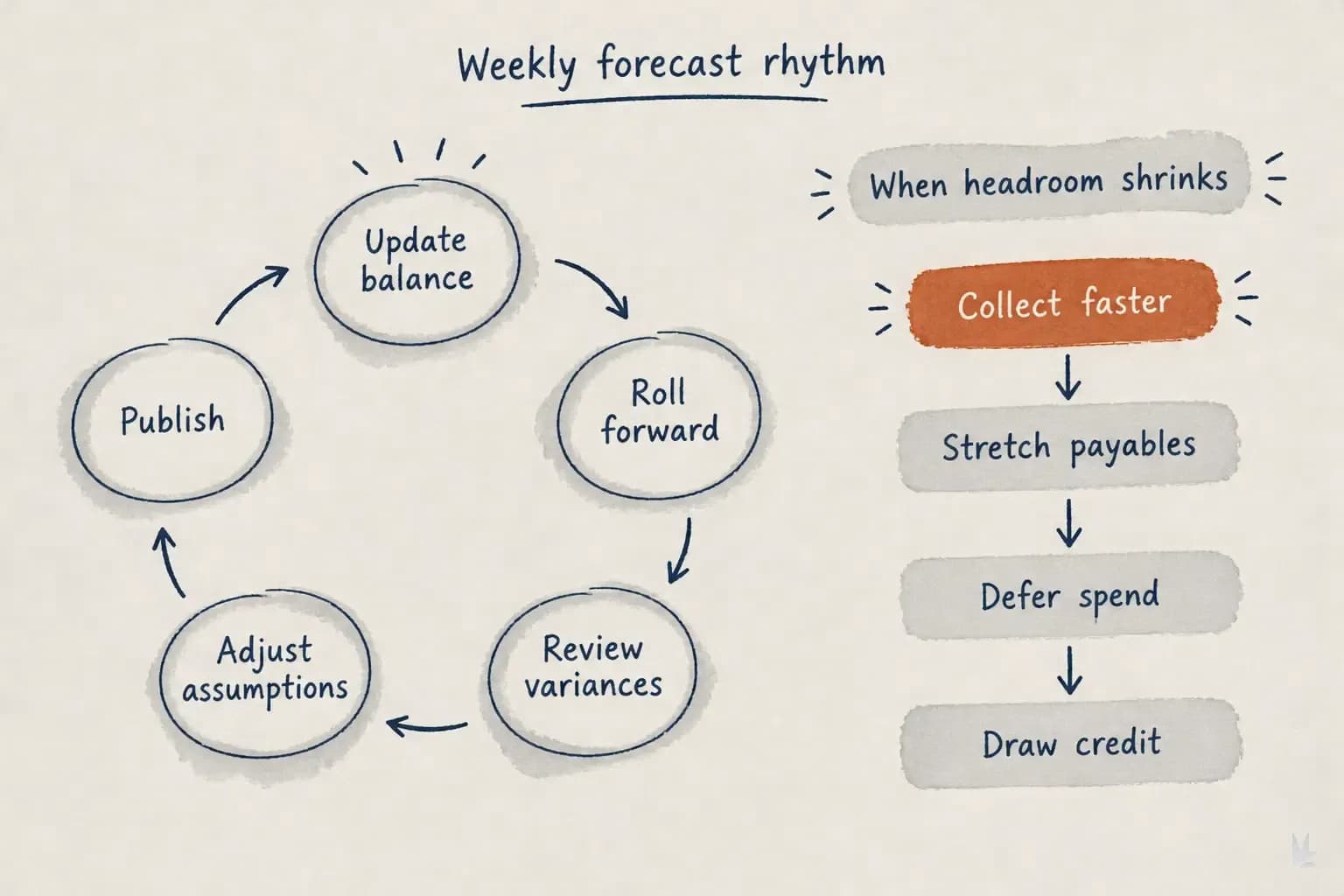
Run the same weekly cycle, and act in order of speed and cost.
When headroom shrinks, act in order of speed and cost. Accelerate collections on the largest late invoices, then stretch non-critical vendor payments, defer discretionary spend and capex, and only then draw on credit lines. Pick your trigger levels now, write them next to the floor, and start with next week’s bank balance.